What is turbo variable geometry and why does it need setting up?
Published: 27.09.2026
Many modern diesel and some petrol engines use variable geometry turbochargers (VGT, VNT). Here's what that means and why it can cause problems.
How it works
Around the turbine wheel sits a ring of movable vanes — the nozzle ring. The vanes change their angle to direct the exhaust gas flow onto the wheel:
- at low revs the vanes close up, the flow speeds up, the turbo spools quickly and gives pulling power low down;
- at high revs the vanes open, so the turbo doesn't create excessive pressure.
The vanes are moved by an actuator — vacuum or electronic — on commands from the engine control unit.
Why variable geometry fails
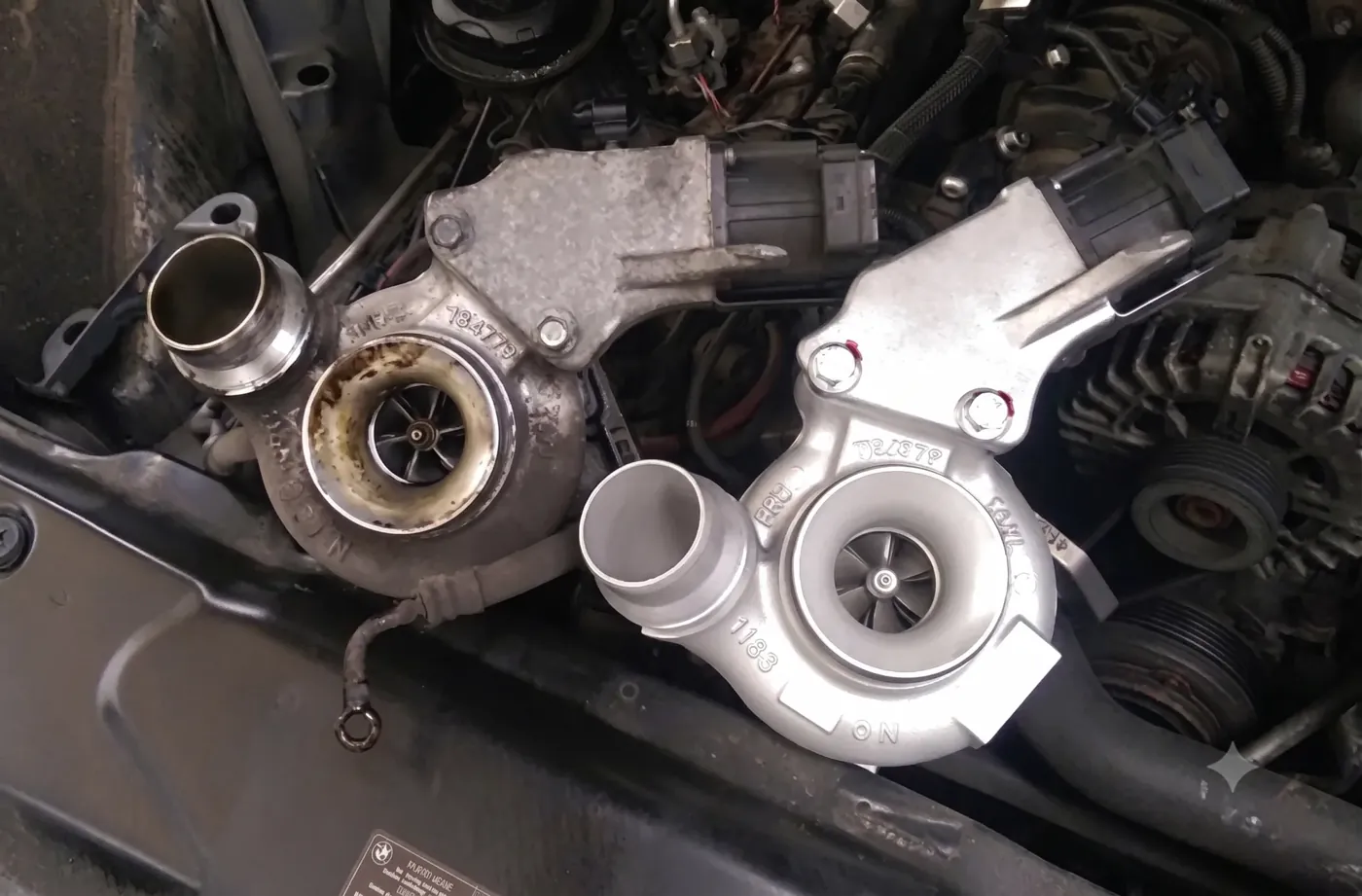
- Carbon. Soot and oil build up on the vanes and the ring, and the mechanism starts to stick.
- Wear. Over time, play develops in the mechanism.
- Incorrect setup after a repair or part replacement: the turbo gives too little or too much boost.
How it shows up
- Fault codes P0299 (underboost), P0234 (overboost), P2563 and similar.
- Hesitation under acceleration and weak pull at low revs.
- The engine going into limp mode.
Why setup matters
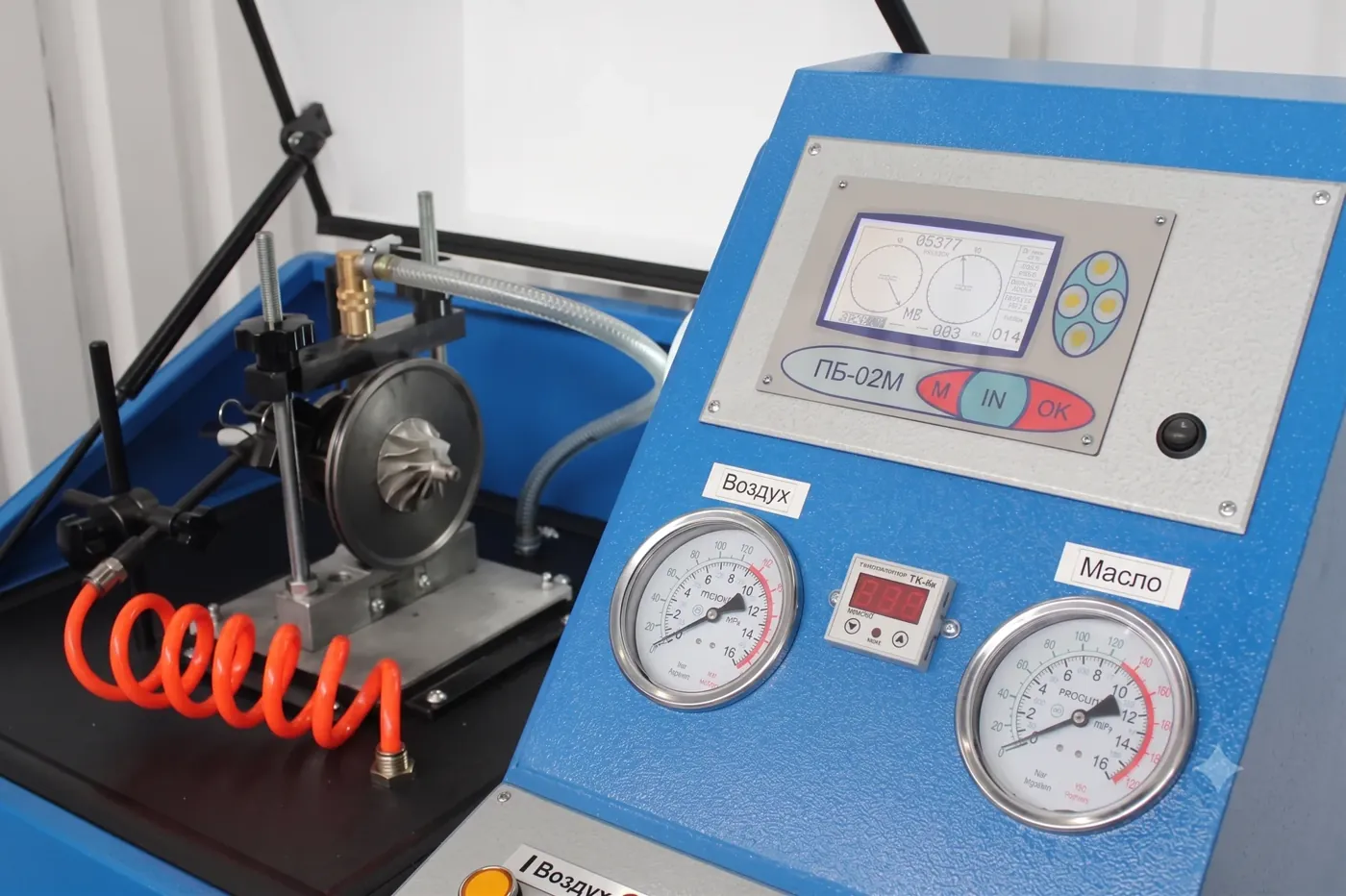
Even a perfectly healthy turbo will work badly if the variable geometry and actuator are not set up correctly. We set them to the manufacturer's factory specs after every repair and cartridge replacement. More — Variable geometry repair and setup and Actuator setup.